Vedauwoo Recreation Area, Wyoming


When I started researching Vedauwoo during the planning of this trip, I was pretty sure that I was going to like it.  The area checked lots of my boxes.  High elevation, free camping, thirty minutes from a college town (Laramie), trails, and interesting rocks.  

This area is closed to campers (with gates across the road) until about June 1st each year.  We drove in from Nebraska on June 2nd. Vedauwoo is literally right off of Interstate 80 between Cheyenne and Laramie.  The closest "town" is Buford (population 1).  Verizon cell phone service was iffy but could be improved to two bars by climbing a nearby rock formation. 

Pronounced Vee-da-voo, the area is popular among rock climbers and off road vehicle enthusiasts.  Rock climbing is a silent sport and doesn't bother me a bit, although I have no urge to do technical climbing.  Off-road vehicles don't bother me a bit until someone turns the key.  Then the noise and dust can be quite annoying.  Thankfully, most of the time that we were here, the dust and noise were minimal.  As the weekend approached, the noise and dust increased but only near the road. There was one younger boy that drove up and down the road from sunrise to sunset, back and forth, back and forth.  We tried to stay far away from the road when things got dusty and noisy.

Dispersed camping is different here from other places that I've been.  You must camp in assigned spots, which are numbered.  That might seem  like a negative, but it didn't turn out that way.  The numbered campsites are extremely well-spaced, and there's got to be at least a hundred of them.  The system actually worked well to keep people from bunching up too close together.  The spot we finally settled in (lucky 13) was a couple of hundred yards from the next nearest camper.  

Back yard

Side yard


Front yard

There is a pay campground here also, but the sites are much tighter together, and there is no good reason to stay there.  All water must be brought in, although there is a spigot at a rest area on the way to Laramie.  There was also a vault toilet about a ten minute walk from our campsite.  It was kept clean and well-stocked by U.S. Department of Agriculture employees.

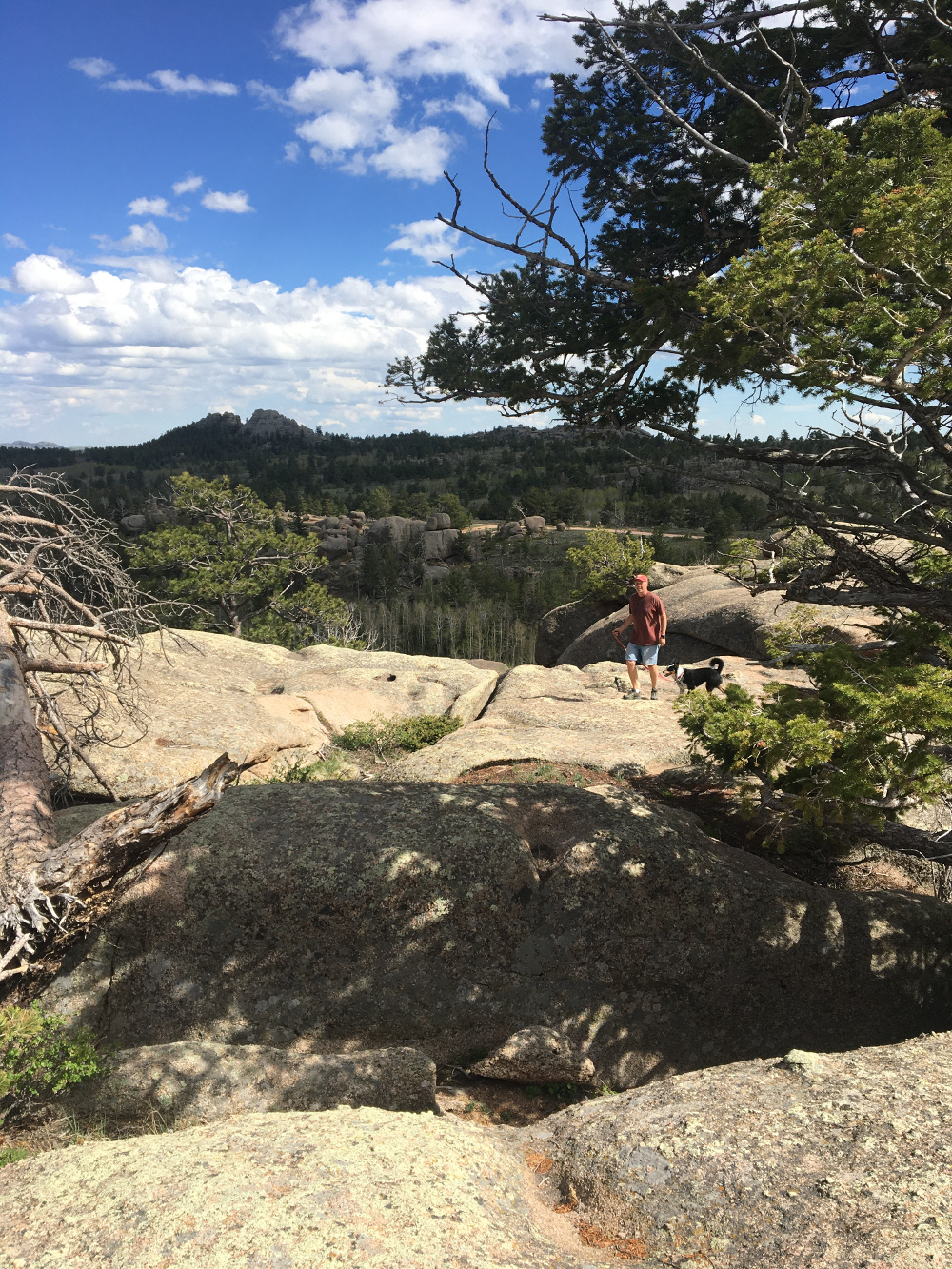
What's to love about this place?  For me it was the rock formations. As mentioned before, I'm not a technical climber, but there are so many rock formations to play around in.  It really made me feel like a little kid to run around in and on top of the rocks.  Pure joy!


The elevation was over 8000 feet at our camp, so we enjoyed warm days (70's) and cool nights (40's).  After each day of exploring, we had plenty of time for food and drink.  We stayed six days.


We made a few side trips to visit Laramie and Cheyenne and also did some hiking in the Pole Mountain area.  Those will be the subject of a separate post.  


Fort Robinson State Park, Nebraska

 After almost a week in the Badlands of South Dakota, we were both ready for a shower, laundry, and dump station.  We hitched up early on the morning of May 31st and drove to Fort Robinson, which is in the Nebraska panhandle.  

Julia and I have talked about how each campground has its pros and cons. Fort Robinson was no different.  There were showers and laundry, electric hookups, and a number of trails available for hiking.  On the con side, it was kind of expensive:  approximately $60 for a two night stay plus another $16 in state park entry fees.  For that amount, I expected more.  The garbage dumpsters were overflowing onto the ground.  The sites were tight, and there were a lot of people camping mid-week.  

On the first day, we cleaned up and got our chores done.  Then we took some time to hike the nearby trails.  Unfortunately, we got into some tall grass near a lake which resulted in numerous ticks attaching themselves to us.  More showers ensued.  

Fort Robinson has numerous "historical" signs around the premises.  I know from taking college history courses many years ago at the liberal University of Wisconsin that the contents of historical accounts are filled with the biases of the historians.  And what isn't in historical accounts or how the information is related is also dependent upon biases. 

Let's see.  This is where Crazy Horse surrendered and then was killed while "resisting imprisonment."  

I've heard that history doesn't necessarily repeat itself, but it definitely rhymes.  The accounts that I have read describe how Crazy Horse surrendered voluntarily but didn't understand that he was going to be imprisoned.  When he realized that he was being taken to the guardhouse, he resisted and was run through with a bayonet by an army private.  Maybe they needed a bigger sign for a more complete account.

A second historical sign commemorates the Buffalo Soldiers at Fort Robinson.

I almost missed the sign because it was located next to the tennis courts and was apart from the other signs.

On our second day at the Fort, Julia and I hiked the Lover's Leap Butte via the Wagon Wheel Trail. We encountered no ticks, and it was a great hike.


The trail starts off with a gradual rise through the grass. We were headed for that rock formation off to the right.


The weather was hot and dry, but there were wildflowers along the way.

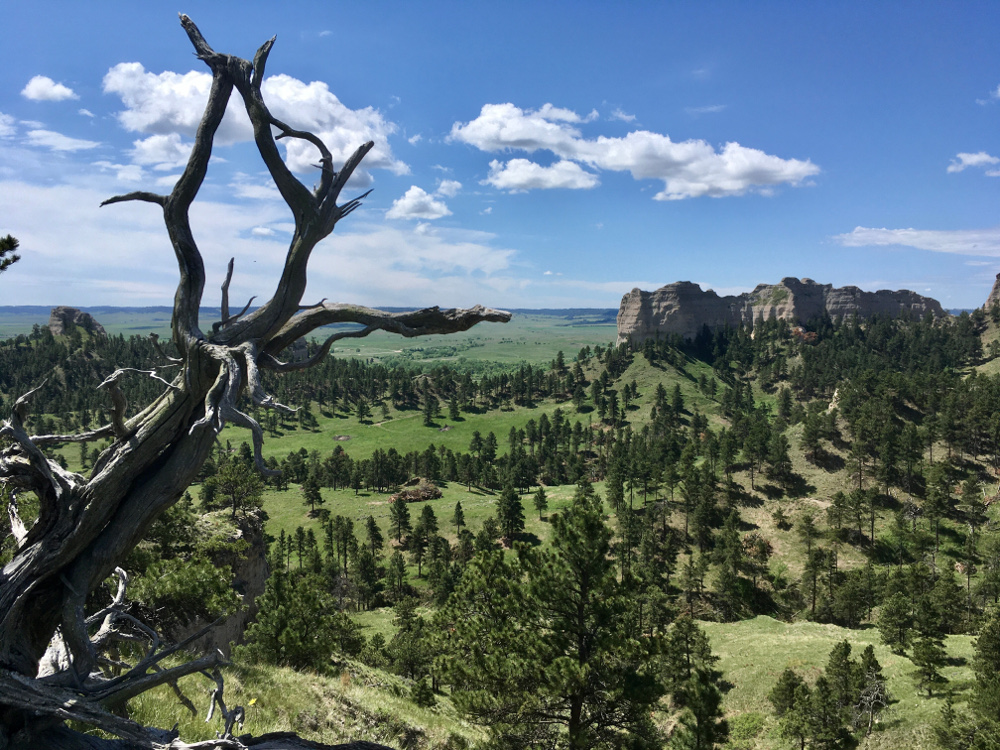
The views were worth the climb.


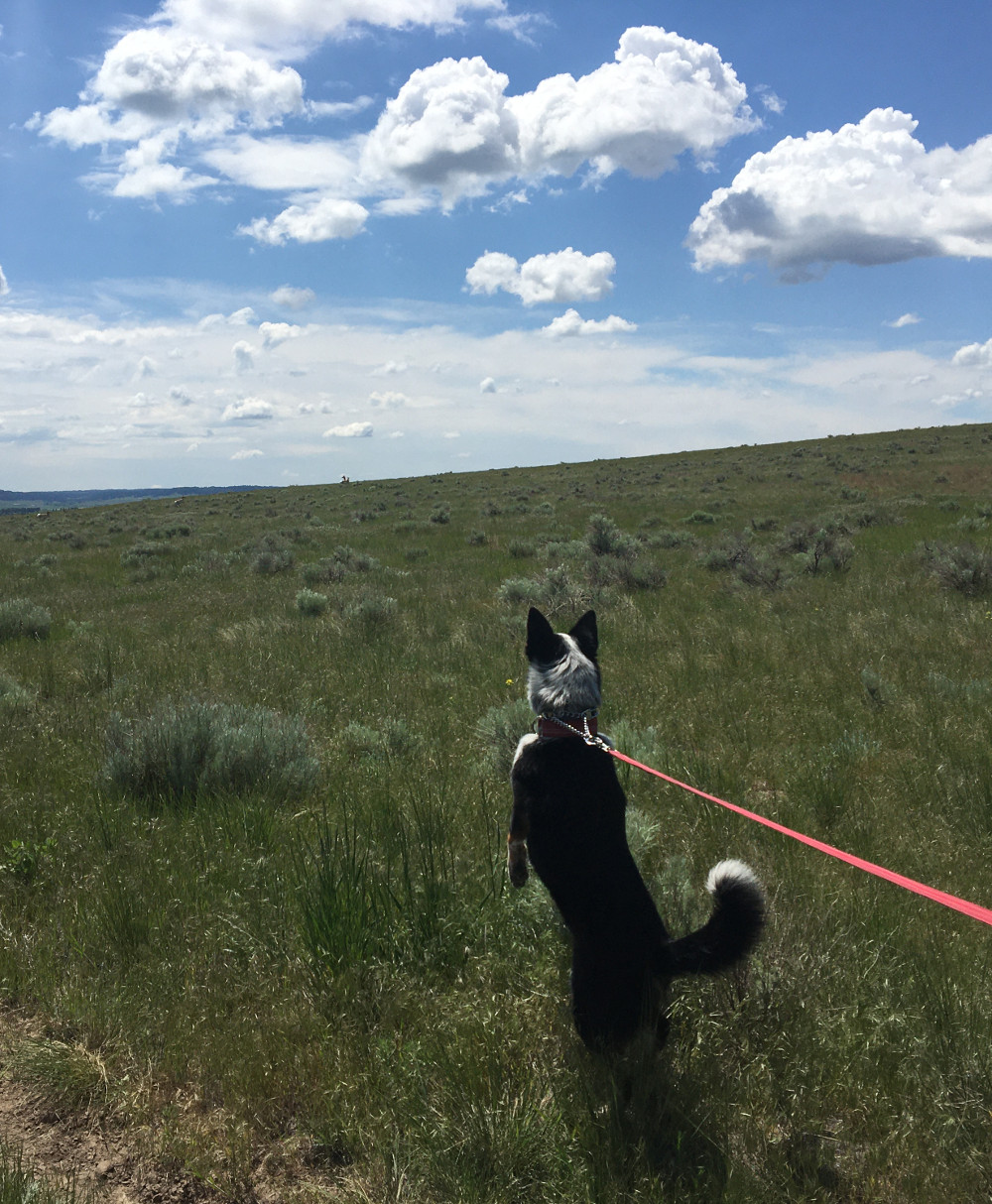
On the way down, a small herd of pronghorns ran across the trail below us.  Callie got a little excited.

Standing Tall on Her Rear Legs

With the weather getting warmer, we were headed for Wyoming's higher elevations.

Sage Creek Campground

As we drove west from Blue Earth, it started to rain steadily. And the forecast was for more rain on the next day. When it rains in the Badlands, the ground turns into a soft, sticky gumbo, known for trapping vehicles, trailers and shoes.

Plan A was to camp along Nomad’s View near Wall, South Dakota. I camped there several years ago. It’s free, and the view of the Badlands is beautiful. But the wet gumbo there is treacherous after periods of rain. So we went with Plan B. Sage Creek campground is also free and within the Badlands National Park.  It’s accessible to tents, truck campers and very small trailers after about a ten mile drive on winding, gravel roads. There was gumbo here also, but it was flat and more gravel.  To get to Nomad’s View, there is a steep, deeply rutted dirt road to climb.

Sage Creek Campground

Tenters camp on the inside of the circle. Outside the circle is a bit of a free-for-all for tents and small trailers. The photo above was taken from one of the high bluffs behind the campground, where I found, paradoxically, solitude and four bars of internet. 


We stayed here four nights. As the weekend approached, it became more and more crowded, until we eventually had to leave. Unlike most dispersed camping, people packed in tight, vehicles sometimes passing less than a foot from my doorstep in order to squeeze past our tenting neighbor, an older, disabled Asian gentleman from Chicago.

What is the draw for camping here?  I’m sure some people come simply because it’s free and on the way to Yellowstone. But for us and most others, it was the chance to camp with the wild bison found here.


These guys were just a few feet from the front of our camper. Now let’s get things straight.  Nearly all of our close viewing was done from inside the Scamp. At least a dozen of the animals came through every day.  


On the other hand, we saw quite a few people who seemed to think that these wild bison were in the same class as dairy cows.


And I didn’t get photos of the most amazing interactions. One of the tenters was loading his car trunk when a bison leaned into the open rear passenger door. Another time, a dog on a long rope broke its tether and began running after the closest bison. The bison’s tail went straight up ( a sign of agitation), and it squared off against the dog.  I honestly thought the dog was going to get killed.  But the bison did not charge, and the dog’s owner got it back to the vehicle.

There were parts of Sage Creek that I absolutely loved. The trails in the surrounding bluffs were amazing. The chance to see bison close-up on their turf was a privilege. In the end, I was defeated by the encroachment of crowds of people and associated human behavior. We eventually headed over to Nomad’s View, which had finally dried out. If I ever return to Sage Creek, it will be off-season and mid-week.

There are no bison at Nomad’s View, but there is more free space and quite a view.


Ho, ho ho


Green Giant

During the last week of May, we moved Justin into the summer dorms at UW Whitewater. He will be taking chemistry this summer. Good luck, Justin.

We were on our way west. Our first stop was Blue Earth, Minnesota, where we stayed at the county fairgrounds’ campground. 

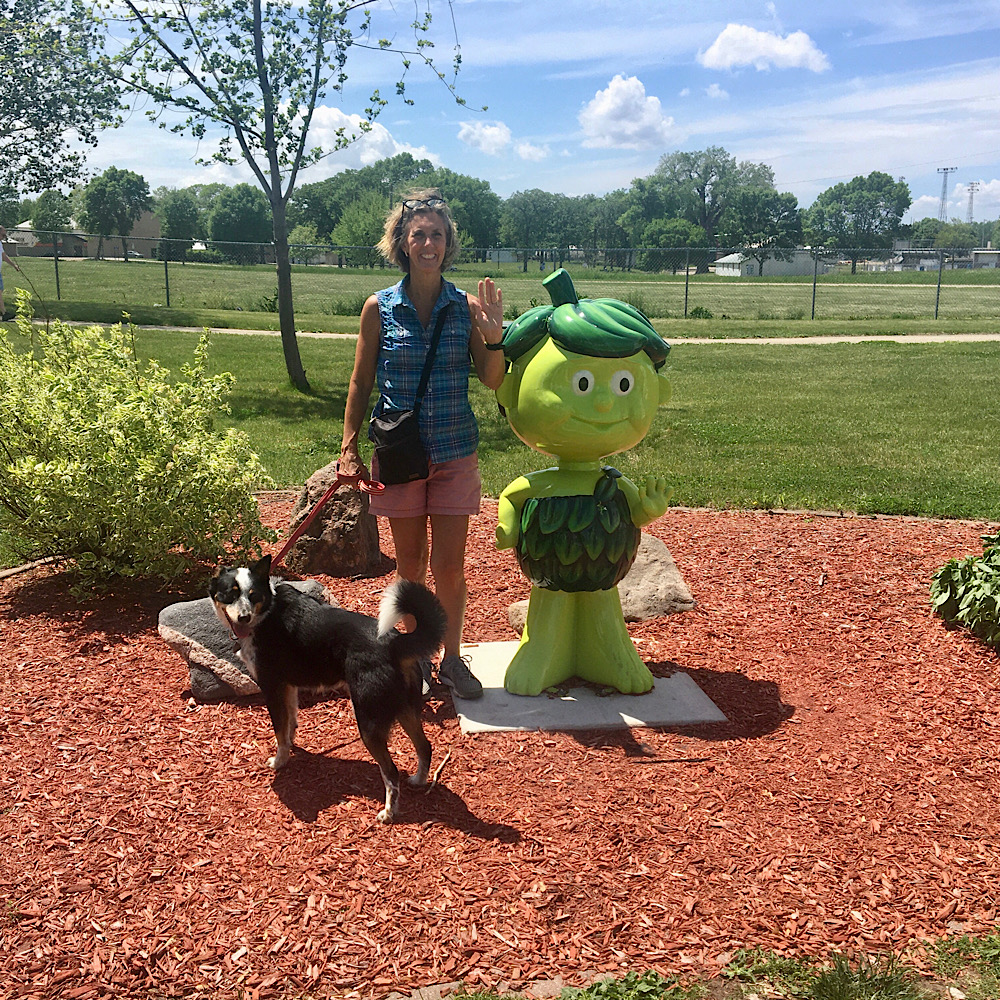
Blue Earth is famous for, you guessed it, the Jolly Green Giant and little sprouts too. 


But the real reason for stopping in Blue Earth was to see our friends, Brent and Michele. We had a quick dinner at a local Mexican restaurant and then spent time at their home catching up.


It was a great start to our trip. Next stop: South Dakota. There will be dispersed.camping. Julia is excited, kinda, sorta.

Muscatine, Iowa


We have grown to love the little towns of Iowa along the Mississippi River. Muscatine quickly became our favorite. 


This is the town that Mark Twain worked as a young newspaper reporter. 


We camped at another Corps of Engineers campground just north of town.


We spent one day hiking all of the trails at nearby Wildcat Den State Park. No entry fees.


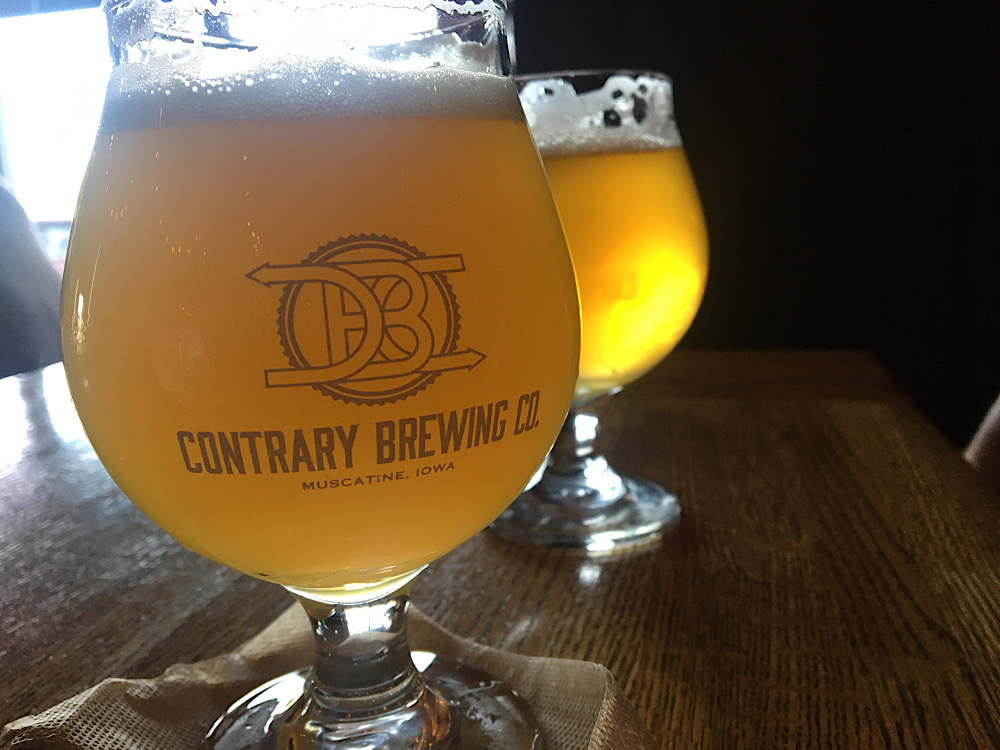
And, of course, there was time for a brewpub. Muscatine has a really good one: Contrary Brewing.


That concludes our Midwest trip through Illinois and Iowa during early May. Our next trip in late May headed weat.


Rend Lake, Illinois

Our next stop in early May was at another Corps of Engineers campground at Rend Lake near Benton, Illinois. 

We needed to reserve a spot for the weekend, and things were already getting crowded on the first weekend in May. I made the reservation two weeks in advance, and our site was far from prime. To get level, I needed all of my leveling blocks for the rear of the trailer. 


There was a lengthy bike/hike paved trail on the property. We took full advantage and walked at least five miles every day of our stay. After the weekend, the campground emptied out enough to score a lakeside site. 


Julia kayaked several times on the lake.


We visited two brewpubs in the area. The first was called  The Hop Brewery in Christopher, Illinois. The town was in bad economic shape.  The brewery was newer and the highlight of the town.


Julia had a Hefeweizen that she thought was ok. I had something called a white stout that I didn’t like much at all. I thought it would be light colored but full bodied, but it was more like a stout on a diet.


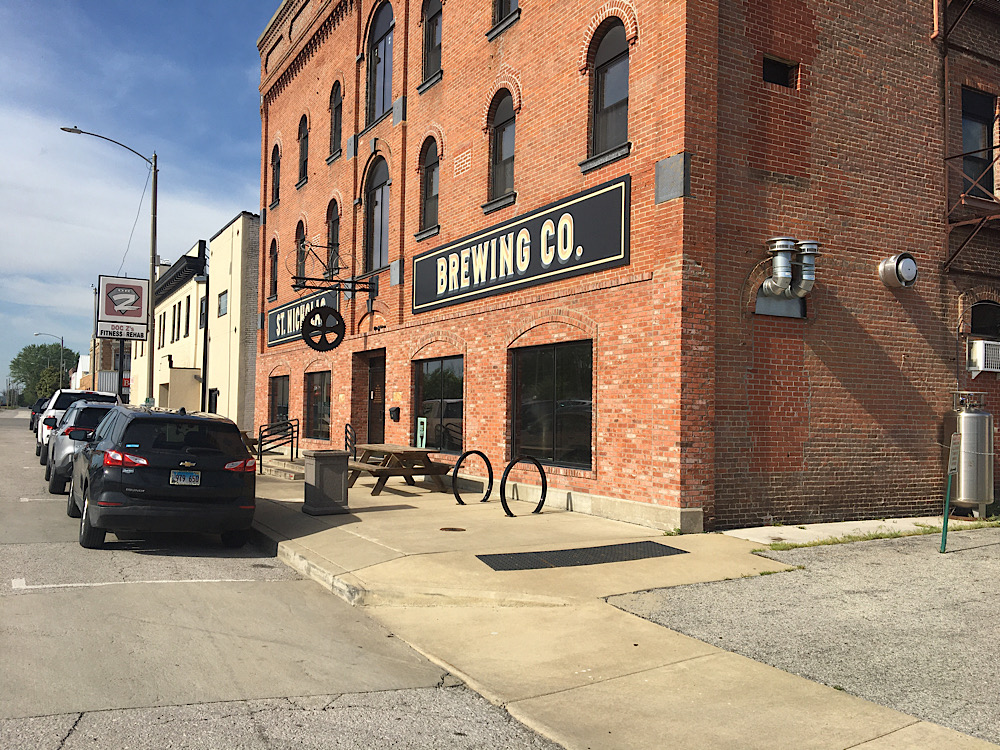
We also went to St Nicholas Brewery in Du Quoin, Illinois. The beer here was much better.


We spent four days at Rend Lake before heading across the river to Mark Twain country in Iowa. 

Camping with Elon?

 This interesting rig was in our campground last night. The trailer appears to be a prototype from a California start-up company.